
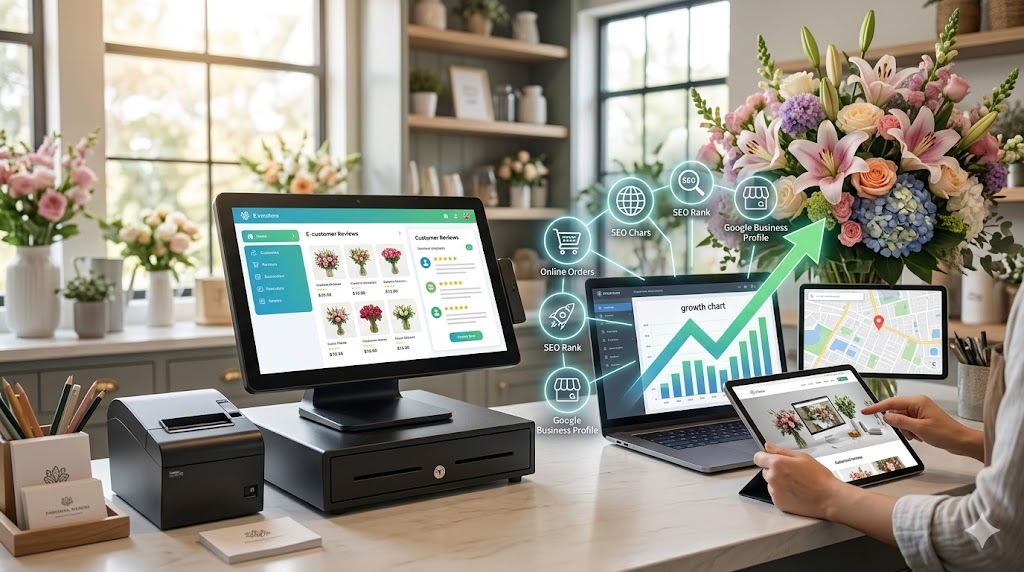
In the floral industry, your digital storefront is just as important as your physical shop window. As more consumers turn to their smartphones to send last-minute bouquets, the question for shop owners has shifted from “Do I need a website?” to “What is the best website builder for a flower shop?“
Choosing the right floral e-commerce platform can be the difference between a flourishing business and one that struggles to keep up with modern consumer demands. In this guide, we’ll explore why a specialized florist website builder is essential for growth and how to optimize your online presence for maximum sales.
Florist-Specific Builders vs. General E-commerce Platforms
When looking for flower shop website software, many owners consider general platforms like Shopify, Wix, or Squarespace. While these are powerful tools, they often lack the “floral-DNA” required to handle the unique nuances of our industry.
General platforms usually require expensive third-party plugins to handle:
- Card Messages: A critical component of every floral order.
- Delivery Date Pickers: Ensuring orders aren’t placed for Sundays or holidays when you are closed.
- Funeral/Sympathy Details: Specific fields for service times and location.
An affordable website builder for flower shops like eSAT by eFlorist is built from the ground up to include these features natively. By choosing a specialized website for florists, you avoid the “app bloat” that slows down general sites and creates a fragmented checkout experience.
Local SEO Optimization for Independent Florists
Having a beautiful site is only half the battle; people need to find it. SEO optimized florist websites focus heavily on “Local SEO.” Since your primary customer base is within a specific geographic radius, your site must signal its relevance to Google for local searches.
To dominate local search results:
- Claim your Google Business Profile: Ensure your NAP (Name, Address, Phone number) matches your website exactly.
- Use Location-Based Keywords: Integrate phrases like “Same-day flower delivery in [City Name]” into your H1 tags and meta descriptions.
- Optimize for Voice Search: People often ask Siri or Alexa for a “florist near me.”
For a deeper dive into improving your visibility, check out our guide on Local SEO Strategies for Florists.
Conversion Rate Optimization (CRO): Turning Visitors into Customers
How to increase online flower sales starts with the visual experience. High-quality imagery is non-negotiable. Your mobile-friendly flower shop templates must showcase your arrangements in a clean, high-resolution gallery.
To improve your conversion rate:
- Simplify the Gallery: Use filters for “Occasion,” “Price,” and “Flower Type.”
- Trust Signals: Display real customer reviews and secure payment badges prominently. Learn about Review Manager.
- Clear CTAs: Ensure the “Add to Cart” button is vibrant and easy to find on mobile devices.
Managing Seasonal Peak Traffic (Valentine’s & Mother’s Day)
For a florist, 30% of annual revenue can happen in just a few weeks. A standard host might crash under the weight of Valentine’s Day traffic. A dedicated floral e-commerce platform provides high-performance hosting designed to handle these surges.
Beyond server stability, your online ordering system for local florists should allow you to “blackout” specific dates once you reach capacity or adjust pricing dynamically for holiday premiums.
Logistics: Delivery Zone Mapping and POS Integration
One of the biggest headaches for shop owners is managing delivery logistics. The best website builder for independent florists should offer:
- Distance-Based Fees: Automatically calculate delivery costs based on the customer’s distance from your shop.
- Zone Mapping: Define specific zip codes or neighborhoods where you offer service.
- POS Integration: Many owners ask, “Do I need a POS for my florist website?” The answer is yes. A florist website with POS integration ensures that your in-store inventory and online sales are synced, preventing you from selling flowers you no longer have in stock.
Explore our Custom Floral Website Design Services to see how we integrate these logistical tools seamlessly.
Automated Marketing and Abandoned Cart Recovery
Did you know that nearly 70% of online shopping carts are abandoned? For florists, this often happens when a customer sees the delivery fee or gets distracted.
Modern flower shop website software includes automated email recovery. If a customer enters their email but doesn’t complete the purchase, the system automatically sends a friendly reminder (perhaps with a small discount code) to bring them back. According to data from the National Retail Federation, personalized retargeting is one of the most effective ways to recapture lost revenue in the gift-giving sector.
Step-by-Step Guide: Migrating to a Modern Builder
If you are currently using a legacy system or an outdated site, the thought of migrating can be daunting. Here is a how to build a florist website migration checklist:
- Audit Your Content: Identify your best-selling products and most visited pages.
- Export Customer Data: Ensure your existing customer emails are saved for your new marketing CRM.
- Redirect Old URLs: Use 301 redirects so that your old links don’t lead to “404 Not Found” errors, which can hurt your SEO.
- Set Up Your Domain: Connect your existing URL to your new, modern platform.
Ready to take the next step? Request a Demo with our team to see how eFlorist can transform your digital presence.
Conclusion
The floral industry is evolving, and your technology should evolve with it. By choosing a dedicated florist website builder, you aren’t just getting a website; you’re getting a partner that understands the seasonal rushes, the delivery complexities, and the local SEO needs of a modern flower shop.
Invest in the right tools today, and watch your business bloom tomorrow.